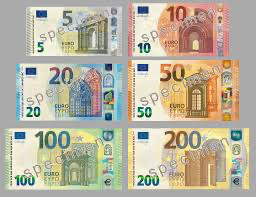
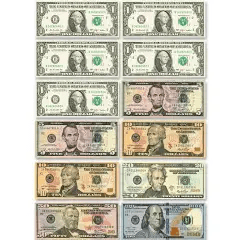
The legal tender of European nations, even before the formation of the European Union, always seemed to me to be superior to that of the United States in that differing denominations would vary in size and color, thereby becoming that much easier to identify quickly and, sensibly, the greater the value of the bill, the larger the bill would be in comparison to lesser valued currency residing next to it in your wallet whereas the dollar certificates issued by the mint of the US (although the word “mint,” to me, implies coinage, which we will get to later. Paper [and here I’m using the word “paper” as a term of art because, whatever material being used for currency currently, it is not truly paper] is printed on.) are all the same green, all the same size, which does bring some superficial order to a wallet with the necessary dimensions to accommodate them but requires a more exacting examination of the wallet’s contents before you deliver the tender in a retail transaction.
The EU has sensibly continued this tradition in it’s issuance of Euros so that, once you have learned which color corresponds to which denomination, you can effortlessly select the proper bill and, even if you haven’t committed the designated color for the bill needed to complete the transaction to memory, you can’t go very far wrong by relying on the graduated dimensions.
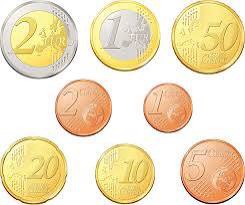
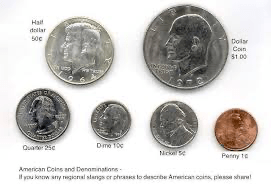
Another innovation of the EU is minting (and in this instance it fits perfectly) coins for a single Euro or for two Euros, a practice the US would do well to emulate; but in this, I can only assume, the pitfalls of coalition governance has manifested in that the coin for one Euro has a copper-looking rim with a nickel-looking center which, unfortunately, is exactly the same design of the two Euro coin! There is a difference in size so that when you reach blindly into your pocket, you can tactily differentiate between the two, assuming your pocket contains coins of both denominations (yes, they do differ in diameter but not by much – which denomination you will find in your palm after removing a coin from your single-coin-denomination-holding pocket is a crap shoot). In this, they’d do well to look to their fellow NATO member across the Atlantic where pennies are copper-looking, nickels are nickle-looking, dimes are silver-looking (although dimes are much smaller than the less worthy nickel and penny, a breach in logic that I assume has a humorous historical antecedent that I’m not aware of), and the 25 cent piece has two silver looking layers around a copper-looking layer, much like an oreo cookie which, and I’m guessing here, you can purchase in exchange for the quarter.
 newsornotnews (noticiaononoticia)
06/26/2024 at 4:21 pm |
Breegs,
The rims and center metals/colors are inverted. They aren’t the same.
Next time I get one of those annoying Susan B. Anthony or Sacagawea coins, I’ll trade you for paper dollars so I don’t accidentally spend them as quarters.
Seems like life is good in Jesus Pobre. Happy for you guys.
Debbie
Sent from my phone. Probably without glasses. Sorry.
>